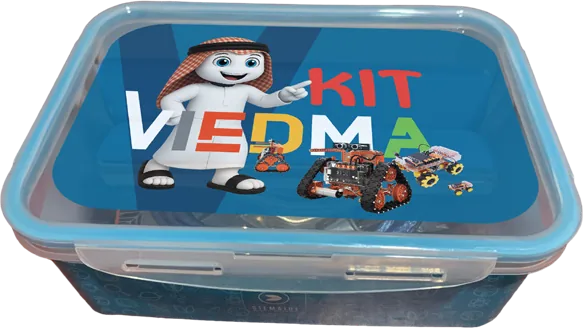
Selected kits aligned with the Viedma STEAM curriculum, for schools, labs and parents.
Looking for toys for young children? Browse kids' educational toys. Order via WhatsApp: choose the quantity and click "Request a quote", and we'll send you the quote and invoice including shipping. Special prices are available for schools and bulk orders.
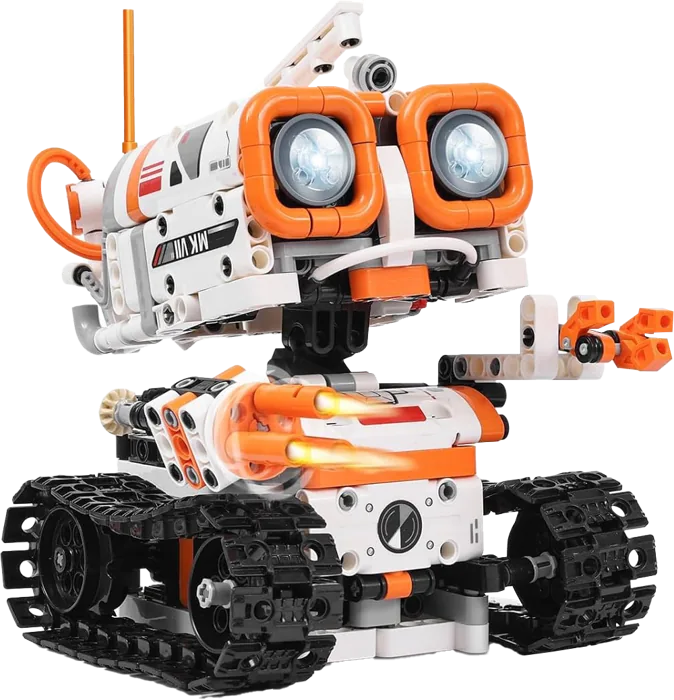
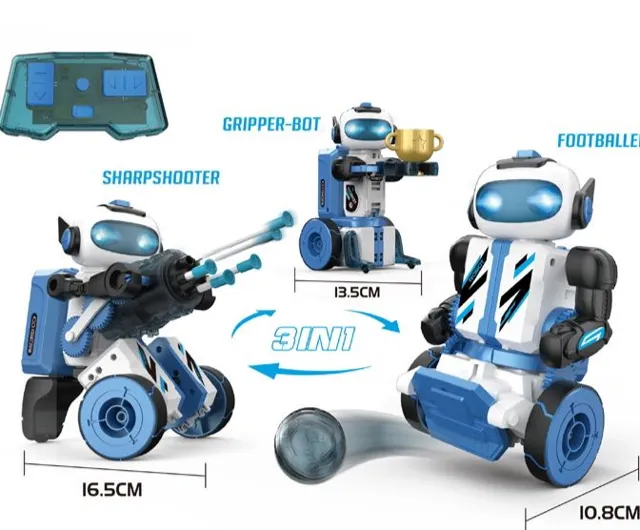
A basic starter set for learning robotics with 300 mechanical shapes. The controller allows both remote operation and programming, and the main controller drives two motors, with a smart programming module that supports line tracking and color recognition. Suitable for schools and centers.
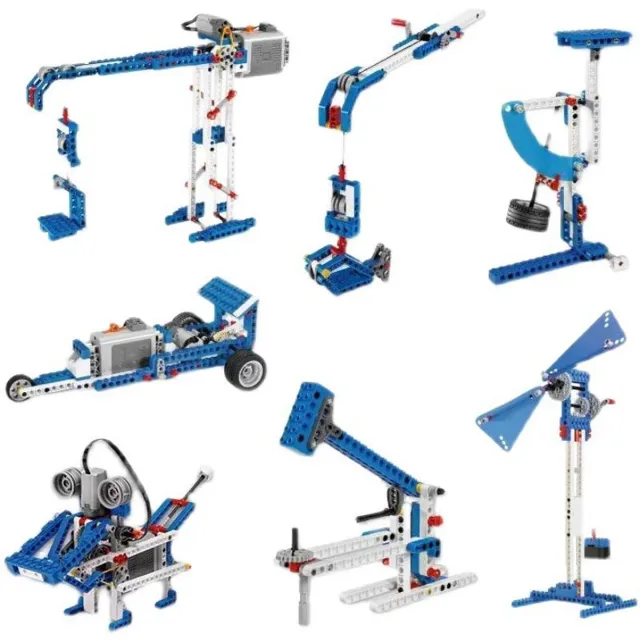
684 pieces including gears, worms, racks, joints, pulleys, cams and chains to build hundreds of mechanical machines. Comes with 18 model guides covering different structural principles and a 9V motor.
731 technical pieces: connecting cables, gears, racks, wheels, axles, clutches and cardan shafts to build mechanical structures and transmit motion with gears, and learn ways to solve real-life problems.
Safe, eco-friendly sensors for learning circuit basics and logical programming, and exploring sound, light, electricity and force. Includes a lithium battery and 20+ sensors, including infrared, buzzer, color and light.
Students program the robot with programming cards and no computer, breaking down each step and making coding symbols and logic tangible. Supports a mobile app (iOS/Android). 853 pieces including the main controller, the programmer, a servo motor with an angle sensor, colored lights, and distance, color, touch, infrared and sound sensors.
A hands-on robot for ages 9 to 16 to learn coding basics. Includes the controller, large and medium servo motors, and ultrasonic, color, touch, gyroscope, temperature, infrared and sound sensors, with a remote, a lithium battery and the programming software.
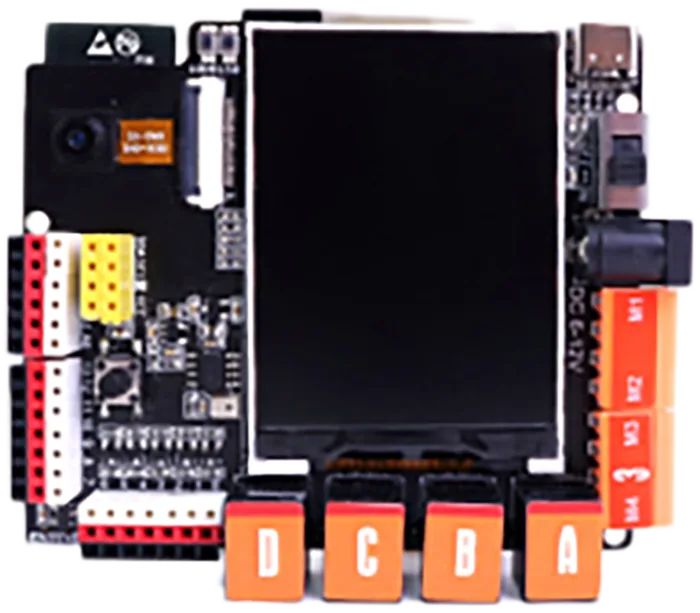
Easy graphical programming software, and a controller with a Cortex-M7 processor and a 7×9 color LED screen where every dot is programmable. 8 input/output ports, a built-in gyroscope, accelerometer and magnetometer, with live display and control and support for up to 40 languages.
A visual coding learning tool for ages 6+, with programming cards and smart control models that turn complex commands into tangible things. Supports remote control and card programming, suitable for families, schools and competitions.
Designed for kindergarten children aged 3–4. Building is based on changing the direction of straight and curved tubes, with small balls and decorations like smiley faces and flags. Comes with 32 class lessons.
Designed for children aged 4–5 with an engineering theme. Pieces are fixed with a screwdriver and threaded perforated blocks, developing observation, safety, wrist strength, finger dexterity, language and self-confidence. Comes with 32 lessons.
Designed for children aged 5–6 at kindergarten or home. Gears, pulleys, turbines, handles and perforated blocks, with wheels, eyes and blades for fun. Comes with 32 lessons.
54 types of basic pieces to build tables, chairs, bridges and houses, with doors, windows, fences, trees and flowers. Used with the Creative Enlightenment, Engineering Creation and Mechanical Exploration kits.
Designed for children aged 4–6 with an engineering and structural design theme. 142 pieces to build more than 30 types of structures, from understanding structures to full application.
For children aged 4–6, based on mechanical learning and using energy. Includes motors, a remote and building blocks; the remote supports 30 channels and the motor has 5 speed levels, meeting certified safety standards.
For kindergarten children aged 5–6. Gears, turbines, pulleys, T, I and triangular connectors with threaded holes and screwdrivers, plus a motor module to build varied engineering and mechanical structures combining handwork and thinking.
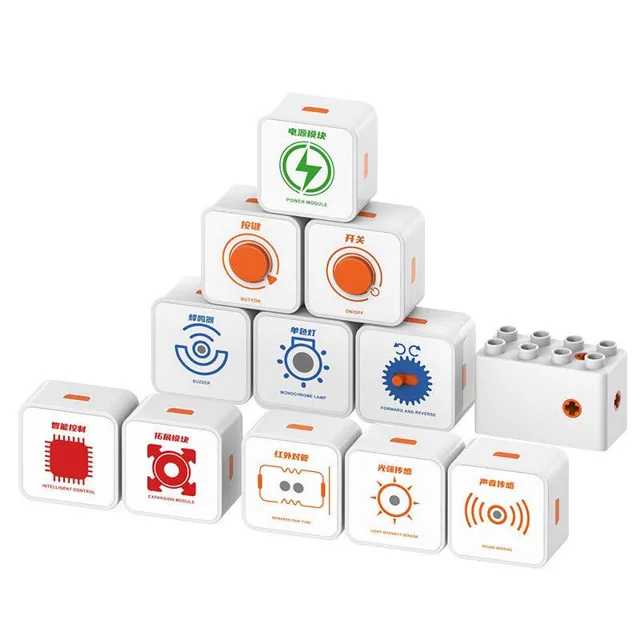
A fun kit that motivates children to learn STEAM and develops early coding skills. Block modules with infrared, light, power and other sensors that develop thinking and inquiry.
For children aged 4–6, with a motor, a child-sized remote and a multidirectional power adapter to build bigger, more fun and more powerful block models.
Mecanum Robot with Robotic Arm, Brain Control & Computer Vision
4WD Robotic Arm & Brain-Computer Control & Vision Recognition Robot Kit
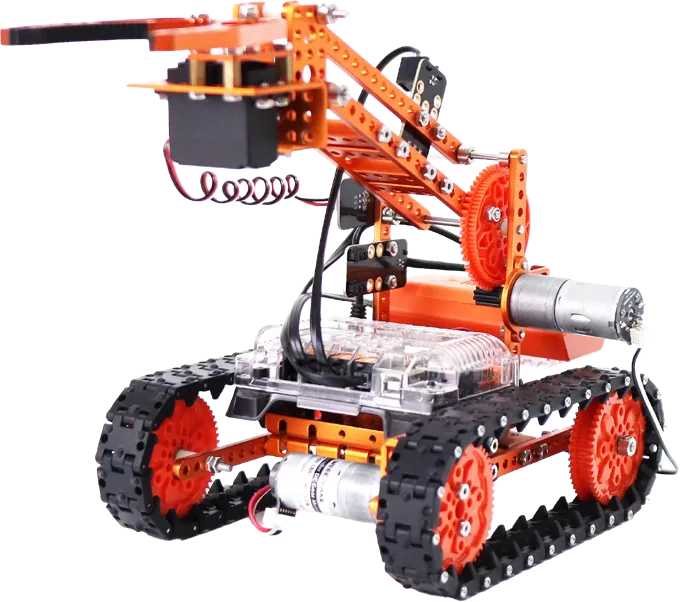
A four-wheel-drive robot with mecanum wheels and a robotic arm, controlled with a brain headband and recognizing objects with computer vision. Controller: ESP32 / STM32. Programming: Keil (C) and Arduino IDE (C/C++).
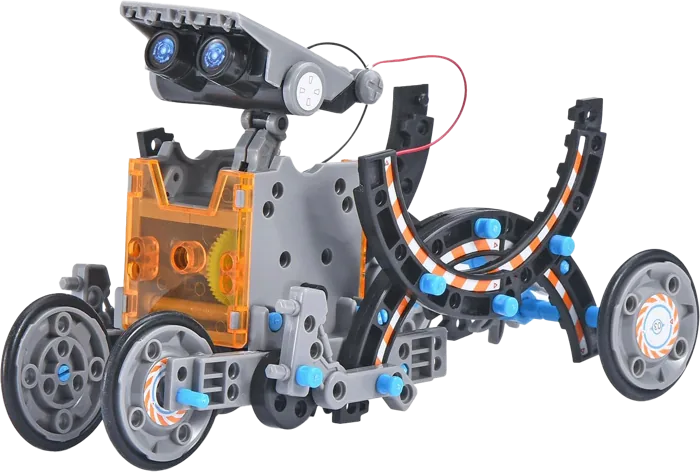
A comprehensive kit combining the 16 RoboBuilder car models: tracked, mecanum, rubber-wheel and Ackermann, with a camera, solar power and a robotic arm. Controller: ESP32. Programming: Arduino IDE (C/C++).
A robot with an ESP32 camera module for live streaming, compatible with Arduino UNO and supporting Android and iOS apps. Controller: ESP32. Programming: Arduino IDE (C/C++).
A robot with an ESP32 camera and UNO board for live streaming and control from Android and iOS apps. Controller: ESP32 and UNO. Programming: Arduino IDE (C/C++).
A robot with an ESP32 camera and a solar charging panel, compatible with Arduino UNO and supporting the mobile app. Controller: ESP32 and UNO. Programming: Arduino IDE (C/C++).
A smart robot with an STM32 controller and ESP32-CAM camera, compatible with Arduino UNO and supporting the mobile app. Controller: ESP32 and STM32. Programming: Keil (C) and Arduino IDE (C/C++).
ESP32 & UNO R4 Minima Ackermann Smart Car Kit V2.0
A smart car with Ackermann steering like real cars, with an ESP32 controller and an UNO R4 Minima board. Controller: ESP32 and UNO R4. Programming: Arduino IDE (C/C++).
Concentration Headband with Gyroscope Control (BCI)
A professional headband controlled by focus and by head movement via a gyroscope, with mental challenge games. Controller: brain–computer interface (BCI).
UNO R3 2WD Obstacle-Avoiding & Line-Following Robot
2WD Robot Kit, UNO R3, Obstacle Avoidance & Line Tracking
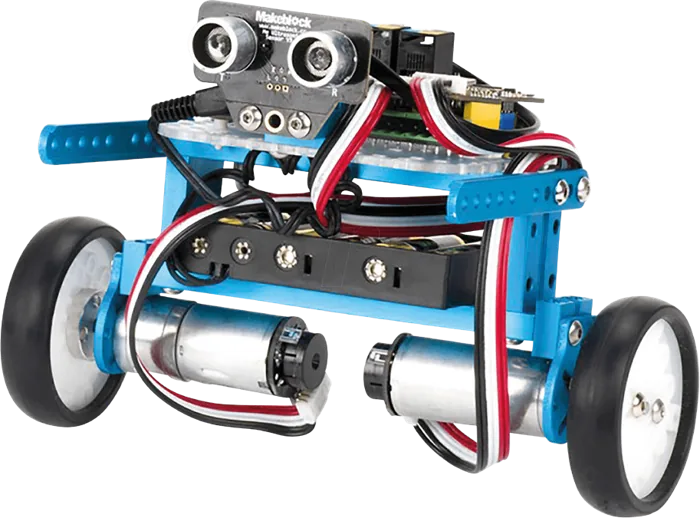
A two-wheel robot that avoids obstacles with ultrasonic sensing and follows a black line. Controller: Arduino UNO R3. Programming: Arduino IDE (C/C++).
4WD Robot Kit, Graphical & UNO R3 Programming, With APP
A four-wheel-drive robot programmed with blocks in Mind+ or in C, with a control app. Controller: Arduino UNO R3. Programming: Arduino IDE (C/C++) and Mind+.
The third version of the wireless 4WD robot, programmed with blocks or C, with an app. Controller: Arduino UNO R3. Programming: Arduino IDE (C/C++) and Mind+.
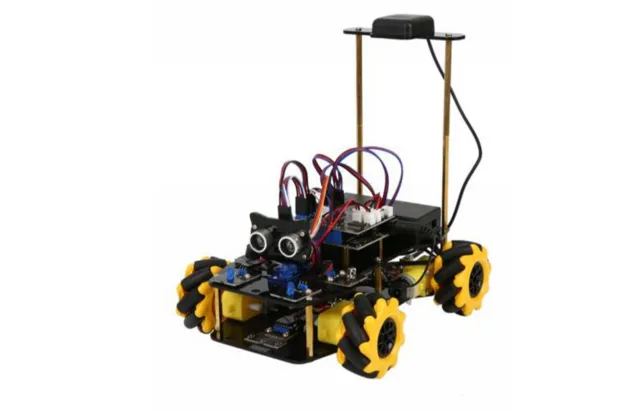
A robot with mecanum wheels and a clear acrylic chassis, wireless and programmable. Controller: Arduino UNO R3. Programming: Arduino IDE (C/C++) and Mind+.
A two-wheel robot with a wooden chassis that students assemble themselves, with a Nano board. Controller: Arduino Nano. Programming: Arduino IDE (C/C++).
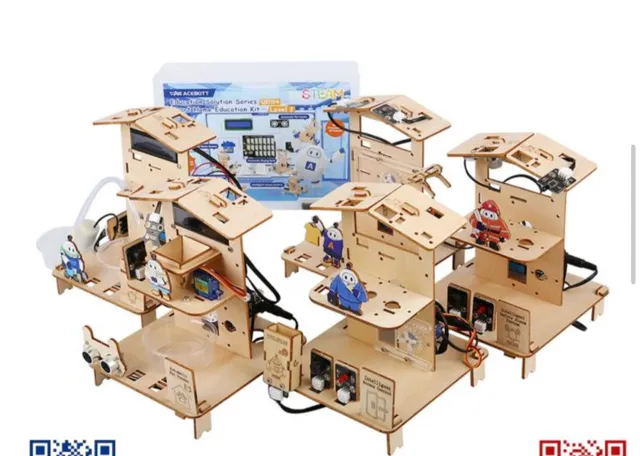
A small wooden house with smart devices: lighting, a door and an alarm, which students program themselves. Controller: Arduino Nano. Programming: Arduino IDE (C/C++) and Mind+.
An ESP32 robot with mecanum wheels that move in every direction, even sideways, with an ultrasonic sensor for obstacle avoidance and distance tracking.
Selected educational toys that encourage children to innovate and make it easy for them to build robots and devices.
Motor
Block Toy Motor
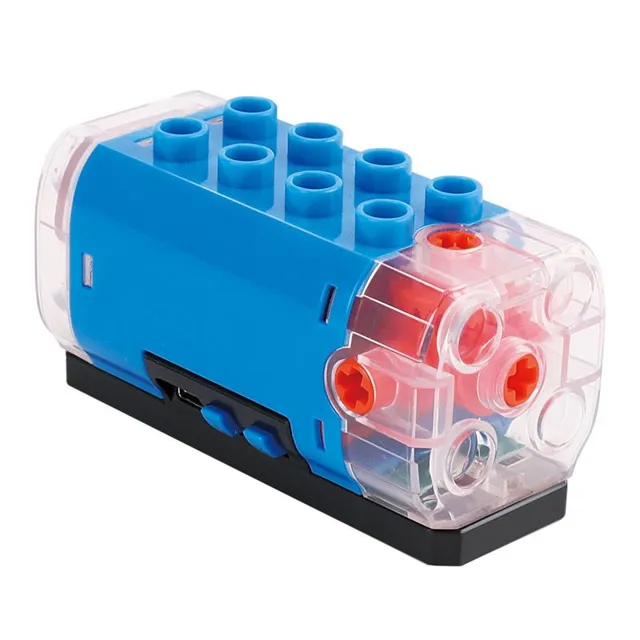
The beating heart of the toy: after the child builds their model, they add the motor and what they built by hand starts moving, giving them a sense of achievement and of being able to bring their toy to life.
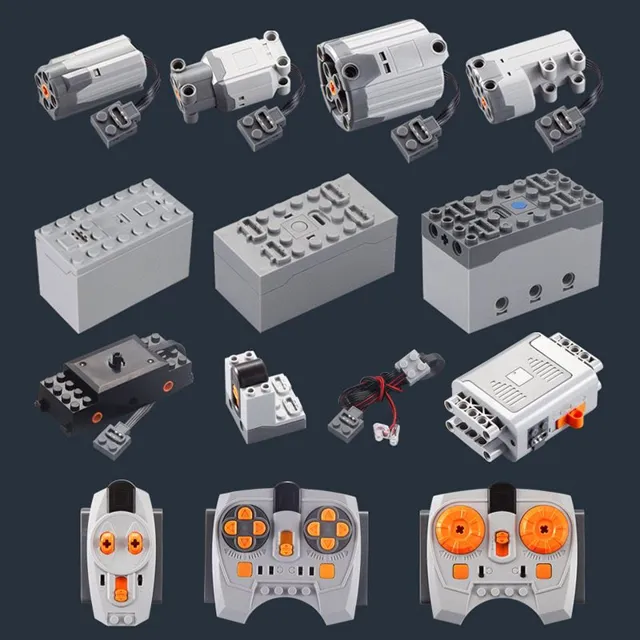
Accessories compatible with basic robot building blocks, and key materials in robot motor circuits. They offer several power options and are precise and easy to fit.
With the same pieces, children build more than one model, each with its own movements and functions, learning how to create new ideas from the same pieces.
Educational solutions with ESP32 and micro:bit boards for making a smart house: students learn to connect sensors and electronic circuits, then give the house voice commands to perform tasks.
Vehicles and robots built from specific pieces to a standard design based on the toy's idea, which the child tests after assembling the complete model.
A complete box that turns the science lesson into a hands-on experience: students build electrical circuits, run the motor and bell, and discover magnets, electromagnets and generating electricity. Aligned with the electricity and magnetism topics in elementary science curricula.
Standard edition52 pieces · 17 experiments
Advanced edition61 pieces · 22 experiments
Features
🔣 Circuit symbols on the partsEach part carries its scientific symbol (+ and − for the battery, L for the bulb, S for the switch), so students easily learn to read circuit diagrams.
📘 Illustrated guide and videosA guide explaining each experiment step by step, with educational videos via QR codes.
🧲 Electricity and magnetism togetherCircuits, magnets, magnetic levitation, and turning motion into electricity with the hand generator.
📦 A box that opens 180°A sturdy storage box that opens fully for sorting and grabbing parts easily. Size 20.4 × 15.3 × 9.5 cm.
✅ Safe and testedPassed safety tests, made of ABS, PP and metal.
🔧 Spare partsWe replace any missing or damaged part.
Sample experiments
Series circuitParallel circuitElectric motorElectric bellBuzzerElectromagnet
And other experiments: the hand generator, the compass, the magnetic car, magnetic levitation, static electricity with a balloon, the metal-plate battery, and conductors and insulators.
Advanced edition contents
Electric motor · hand-crank generator · electric bell · buzzer · hidden circuit box · electromagnet · two bulb holders · two knife switches · two battery holders · multi-base · compass · magnetic needle · magnetic car · U-shaped magnet · large and small bar magnets · two ring magnets · magnetic levitation stand · 6 wires and 2 clip wires · 4 copper and 4 zinc plates · 4 2.5V bulbs · two LEDs · fan · two balloons · paper clips · screwdriver · experiment guide · storage box
The standard edition does not include: the electric bell, the buzzer, the hidden circuit box and the electromagnet.
A hands-on course in which students learn the basics of structural engineering and simple machines by building real models: stable shapes, strong walls, levers, pulleys, wheels, gears and racks, then run their models with a motor and battery. Each activity has science goals, building tasks, an experiment, recording results and an extension question.
12 activitiesA hands-on lesson per activity
684 piecesBeams, gears, pulleys, wheels, motor
What does the student learn?
🧱 Parts and their functionsPins, beams, perforated bricks, axles, pulleys and gears, and when to use each.
🔺 Shapes and stabilityWhy the triangle is the strongest shape, and how cross bracing makes a wall strong.
⚖️ Simple machinesThe lever, the fixed pulley, the wheel and axle, and how they make work easier for people.
⚙️ Motion transmissionSpur, crown and bevel gears, belts and racks, and changing speed and direction.
🧪 Experiments and measurementRecording the relationship between weight and distance, and comparing sliding and rolling friction.
💡 Thinking and innovationOpen challenges and designing models from daily life, then presenting and sharing them with classmates.
The 12 activities
01 Circle, Straight Line and TriangleConnecting beams, building a triangle and a square, and discovering why the triangle keeps buildings and bridges stable.02 The QuadrilateralBuilding pliers and expandable, foldable four-sided structures like accordion gates.03 Strengthen Our HouseBuilding two walls with different structures and discovering the strength of cross bracing, then designing a sturdy house.04 The Eiffel TowerAn engineering challenge: build the tallest stable tower in 30 minutes, and understand gravity and the center of mass.05 We Can Lift the EarthBuilding a vise and a seesaw, and discovering the lever principle and the relationship between weight and distance.06 Wheels and PulleysPulleys of different sizes and changing speed, and building a well-pulley model.07 Raising the FlagThe fixed pulley and changing the direction of force, as in a flagpole, and building a fishing rod.08 The spinning carouselRunning the motor and battery, transmitting motion with a belt and changing rotation speed.09 Wheels and FrictionAn experiment on sliding and rolling friction with recorded results, then building a wheelbarrow.10 GearsThe driving, driven and idler gears, comparing gears and pulleys, and building a fan.11 Crown and Bevel GearsChanging the direction of motion at a right angle, and designing models from daily life.12 The RailwayThe rack and turning rotation into straight-line motion, and building a telescopic pole and a folding clothes rack.
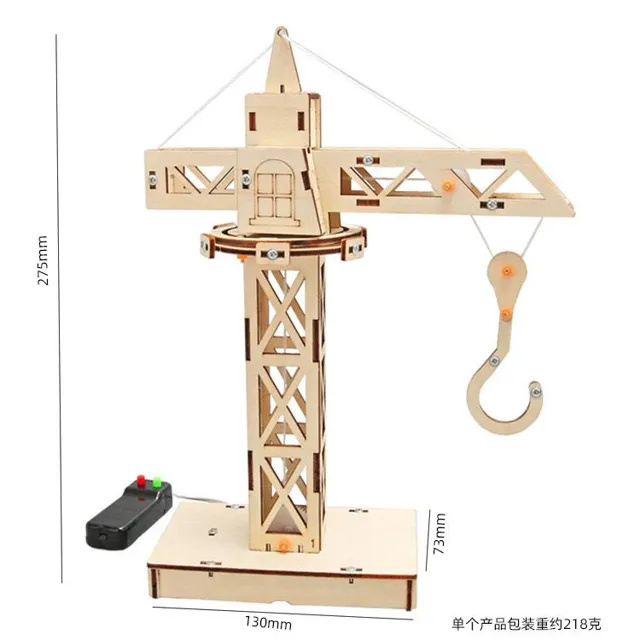
By the end of the course, students build complete machines such as a tower crane, an elevator and a fan, and explain how they work.
Little Explorer: Building the City's Machines and Animals
A fun course for young children in which they build, with big, safe blocks, the construction machines, vehicles and animals around them: an excavator, a bulldozer, a crane, a helicopter, a sailboat, a dog, a bird and a dragonfly. Children learn to use a screwdriver, arms and rotating parts, and get to know each machine's function and safety rules.
12 activitiesA fun lesson per activity
Ages 4 – 7Big, safe blocks and a kids' screwdriver
How does each activity work?
💭 ImagineA question or real-life story opens the topic, e.g. how can we move a mountain to build a house?
🔍 ExplorePictures and discussion about the machine's or animal's shape, parts and function.
🧩 Solve the problemA building task with clear requirements: a stable model, a part that rotates and an arm that moves.
🛠️ Reference modelA picture of the model helps the child, who can add their own touch.
🎤 ShareThe child presents their model and talks about how it was built and any difficulties they faced.
🦺 Safety and valuesSafety signs, cooperation, kindness to animals and a love of exploration.
The 12 activities
01 The Useful ExcavatorThe excavator's shape, parts and uses, and using the screwdriver, the arm and the 360° rotating seat.02 The BulldozerBuilding the bulldozer and its bucket, and learning simple safety signs.03 The DrillerThe driller's parts and uses, building with the robotic arm and problem-solving.04 The CraneBuilding the crane's base and hook, and learning safety rules on construction sites.05 The Big TruckThe truck's structure and functions, and trying more than one way to build.06 Warehouse AssistantThe forklift and how it lifts goods, and developing observation from daily life.07 My DogA dog's traits and habits, building a dog creatively, and developing kindness to animals.08 The Flying BirdTypes of birds and their shared traits, and building a bird with different parts.09 The DragonflyThe dragonfly's shape and life stages, and building long and short arms.10 The HelicopterThe helicopter's parts and the rotor's role in flight, and safety awareness.11 The SailboatThe sailboat's features and uses, and developing a spirit of cooperation.12 The MicroscopeThe microscope's shape and how it works, and developing a love of exploration.